

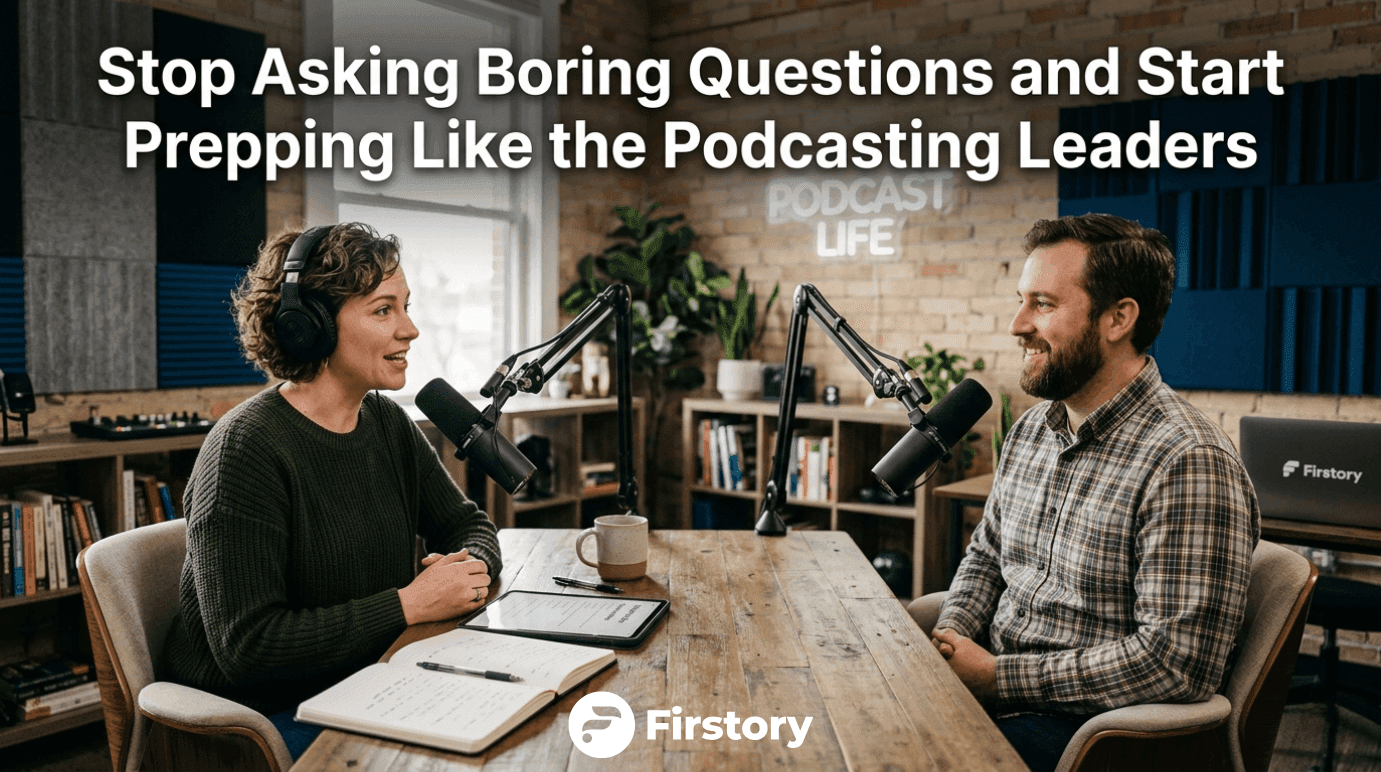
Stop Asking Boring Questions and Start Prepping Your Intervew Like a Podcast Leader
Firstory Team
The team behind Firstory, Asia's leading podcast platform.
Ever wondered why a conversation with a guest on a top-tier show feels so... effortless? It’s like magic. But if you peek behind the curtain of the industry’s biggest names—think Terry Gross, Tim Ferriss, or Lex Fridman—you’ll find that the "magic" is actually a very deliberate, creator-focused strategy.
At Firstory, we’re all about the partnership between you and your platform. We believe that when your hosting tools handle the "heavy lifting," you get the mental space to dive deep into your craft. Today, let’s sit down and chat about how you can prepare for your next interview like the pros do, using a mix of classic research and modern community tools.
1. The "Obsessive" Research Method
The big podcasters don’t just skim a Wikipedia page. They practice what we call "obsessive research". Feel free to pick and choose from several examples of best-practices we found and dig deeper. If you have other methods, feel free to share them in the comment section below!
- The Terry Gross "Dog-Ear" System: The legendary host of Fresh Air reads the whole book or watches the entire film. As she reads, she circles interesting parts and "dog-ears" the pages. She then turns those notes into "chapters" of questions, strategically ordered to build trust before asking the tough stuff.
- The Tim Ferriss "Home Run" Question: Before the "record" button is even hit, Tim often asks his guest: "What would make this a home run for you?". This aligns your goals with theirs and creates an immediate sense of psychological safety.
- The Lex Fridman "Deep Work" Session: Lex is known for four-hour "deep work" blocks with zero distractions. He reads primary academic papers to ensure he can balance technical rigor with human empathy.
2. Prep with Your Community (The Firstory Way)
In the old days, preparation was a lonely task. But at Firstory, we believe your audience is your best co-producer.
- Source Questions via your Audience Community Poll & Voicemail: Instead of guessing what your fans want to hear, let them tell you. Firstory’s Voicemail tool lets listeners record messages without needing to sign up for anything. You can announce your guest a week early and invite your community to send in their questions. With an engagement rate of 67.5% , you’ll have a goldmine of listener-vetted content before you even start.
- Utilize the FLink Feedback Loop: Use your "FLink" (Smart Link) to see which topics from previous episodes got the most clicks. If your audience went wild for a specific niche last time, you know exactly where to steer your next guest.
3. Optimize SEO: The Secret Ingredient in Your Outline
Search Engine Optimization isn't just for after you publish. The best creators bake it into the preparation phase.
Before the interview, create a "keyword map". If you know your audience is searching for "how to start a business on a budget," make sure you frame a question that prompts your guest to use those exact terms. This ensures that when Firstory’s AI Studio generates your auto-transcripts and show notes , the text is already packed with the high-value keywords your future listeners are searching for.
Prep for Interview Podcast FAQs
We looked into our podcaster community, and boy how we find interesting discussions inside. We summarized and provided the answer for several interesting questions:
Q: How much time should I actually spend researching?
A: Industry leaders often aim for a high ratio of prep to production. For a 30-minute interview, seasoned pros often spend 90 minutes or more on research alone. This includes brainstorming original questions that intersect your guest's expertise with your audience's specific pain points.
Q: Should I send the full list of questions to my guest beforehand?
A: It depends! Some hosts prefer to keep things spontaneous to capture authentic reactions. A great middle ground is sending a general "thematic outline". It gives the guest a "feel for the terrain" without making the conversation feel rehearsed.
Q: How do I avoid "autopilot" answers from guests who have been interviewed a lot?
A: Dig for the "tiny mentions". Find an obscure hobby or a comment they made in a five-year-old interview that was never expanded upon. When you lead with something that proves you’ve "done the homework," guests immediately drop their autopilot guard and engage more deeply.
Final Thoughts: Structure Leads to Openness
Preparation isn't about creating a rigid script, but it will build you and your guest a safety net so you can "go off-road" when the conversation gets interesting. Using tools like Firstory’s AI Studio handles the metadata and transcripts , while our unlimited storage and bandwidth mean you never have to worry about a "perfect" interview running long.
Treat your podcast as a collaborative journey with your audience. When you prep with empathy, research with curiosity, and leverage the right tools, you’re not just making a podcast—you’re moving the whole industry forward.
Happy interviewing!